Blockchain and DEX fees
In this guide, you’ll learn how fees on STON.fi really work: what GRAM is temporarily reserved vs. actually consumed for swaps and liquidity provision, the typical cost ranges, and how pool (DEX) fees
Why more GRAM is “reserved”
TON network fees aren’t perfectly predictable upfront. To avoid failed transactions:
We temporarily reserve a bit more GRAM (the “cap”).
The unused part is sent back to you automatically right after execution.
💡 Think of it like tapping your card at a gas station: a higher hold first, then a final charge for what you actually used.
Swaps
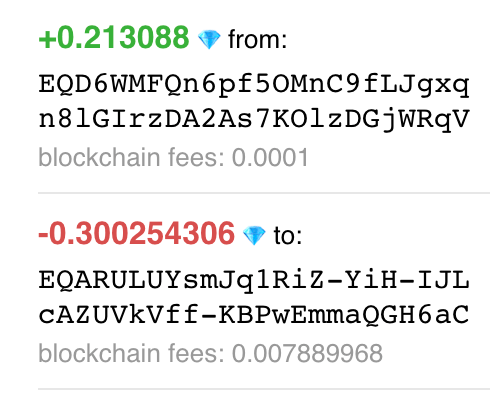
Reservation (cap): up to ~0.35 GRAM (can vary by route/pool).
Typical actual network fee: ~0.06–0.09 GRAM.
Upper bound in some cases: ~0.13 GRAM.
What drives it: the pool’s configured trading fee (set by the pool owner) and route complexity.
Providing Liquidity
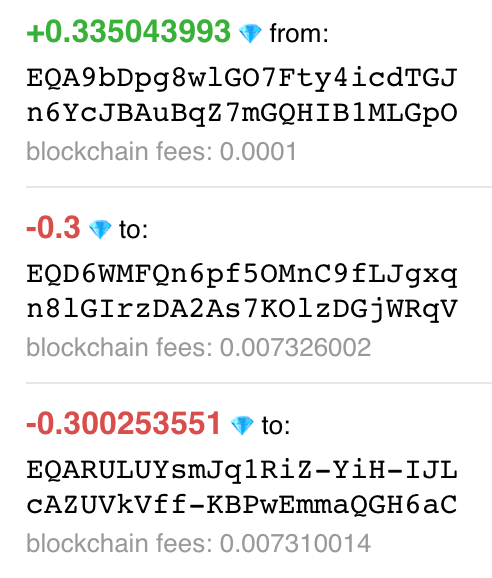
Two signatures, two network actions (one per token). Network fees are reserved separately for each token, it makes two reservations in total. Costs refer to adding liquidity; removing liquidity typically incurs slightly lower network fees.
Total reservation: usually up to ~0.7–0.8 GRAM (both tokens combined).
Typical actual network fee (total): ~0.10–0.13 GRAM.
What drives it: pool configuration and whether you’re using balanced vs. arbitrary provision.
DEX / Trading Fee (Pool Fee)
Who sets it: pool owner.
Common configuration: 0.30% per swap.
Where it goes: typically ~0.20% to LPs and ~0.10% to STON.fi.
But: the exact fee and split follow the pool’s current settings.
🔍 You can see the trading fee in the pool details before you swap or add liquidity.
Practical tips
✅ Keep a small GRAM buffer for fees (even if you mainly hold jettons).
✅ Check the pool’s fee (0.30% is common, but not guaranteed).
✅ Expect a higher reservation on first tries or complex routes; the final spend is usually lower.
✅ If a transaction fails, reserved GRAM is automatically returned — you don’t lose it.
Last updated
Was this helpful?